
Clear the rust, oil and leaf marks off your pavers
Paver Stain Removal in Interlachen, FL
Free stain removal estimates for Interlachen driveways, lanais and walkways begin with a call to (386) 614-8898.
- Brings out deeper paver color
- Fresh joint sand helps lock pavers in place
- Gives weeds less room to grow
- Makes the surface easier to keep clean
- Free estimate, no obligation
Request a Free Estimate
Free, no obligation.
Who removes stains from pavers around Interlachen?
A local contractor treats stained pavers in Interlachen, FL, and the answer to your request arrives within a business day, usually sooner. The estimate is free, with no pressure to book and no obligation. Phone (386) 614-8898 to start.
Orange spots near the sprinkler heads, brown leaf prints under the oaks, a dark patch where a car leaked: each one has its own fix, and the wrong fix can set the mark deeper. A contractor names the stain first, which means the right treatment is chosen before the first pass. Send photos of each mark and say how long it has been there when you request a free estimate.
Which areas near Interlachen can have stains treated?
Every town in the list below has a page with local notes, and contractors reach all of them from western Putnam County. Not seeing your street? Call (386) 614-8898.
- Palatka
- Gainesville
- Middleburg
- Haile Plantation
- Asbury Lake
- World Golf Village
- Ocala
- Fleming Island
- Silver Springs Shores
- Alachua
- Lakeside
- Saint Johns
- Fruit Cove
- Oakleaf Plantation
- Palm Coast
- Bellair-Meadowbrook Terrace
- Mandarin
- St. Augustine
- Anastasia Island
- Argyle Forest
- On Top of the World
- Nocatee
- Cedar Hills
- Marion Oaks
- Lady Lake
What kind of stain is on my pavers?
Naming the stain is half the job. Cambridge Pavingstones, a paver maker, sorts them into families, each with its own treatment. Here are the ones that show up around lake country. Not sure which yours is? Phone (386) 614-8898.
Rust
Orange or brown marks, often from sprinkler water, patio furniture or fertilizer. Rust gets its own treatment and then a rinse.
Oil and grease
Dark patches near the garage door. Drips on top are quick to lift, and oil that has soaked in takes hours of working time.
Leaf tannin
Brown prints where wet leaves sat. The stain returns each leaf season.
Algae and mildew
Green or black film on damp, shaded pavers. It returns while the surface stays wet.
Efflorescence
A white salt haze that rises from the concrete, common on newer pavers.
Paint and tar
Drips from a project. Fresh paint is blotted, never wiped, and dried paint needs a different product.
Why do orange rust stains keep showing up near my sprinklers?
Water often carries iron. Safe Touch, a Northeast Florida company, says iron in well water and reclaimed irrigation causes orange staining. Cambridge Pavingstones tells homeowners to track down the source, whether sprinklers, patio furniture or fertilizer, because a stain that is cleaned but still being fed returns. A contractor can show you which spray pattern hits the pavers. Raise it on the first call to (386) 614-8898.
Treatment is a rust remover and a rinse. Cambridge Pavingstones adds that rust remover can damage a sealer and may need repeating on deep stains, so the order of work on a sealed surface deserves a question. Put that question to the contractor when you request a free estimate.
Will a stronger wash lift the stain?
No, and force can make it worse. Safe Touch says rust needs a rust treatment, then a rinse, and more pressure makes it worse. The same company evens out oak tannin with a surface cleaner rather than a spinning wand, which leaves an even finish. A hard blast also pushes sand out of the joints. Ask what tool and product are planned when you phone (386) 614-8898.
How is an oil stain taken out of pavers?
It depends on how long the oil sat. Cambridge Pavingstones describes soaking up the excess, then leaving an oil treatment in place for 6 to 8 hours until it dries to a powder, and sweeping that off. Fresh food grease from a cookout is lighter work than motor oil that soaked in. Old stains may need a second pass, so the visit can take longer than a wash. Describe the age of the stain when you request a free estimate.
Do brown leaf marks come back every year?
They tend to. Cambridge Pavingstones says tannin stains return each leaf season, and you decide whether to live with the cycle or deal with the tree. Safe Touch says sealing helps keep oak tannin from setting the following season. Interlachen is a lake town with a humid subtropical climate, so wet leaves stay put. Ask whether a coat after the cleaning fits your yard. Phone (386) 614-8898.
Are some stains impossible to remove?
Some are stubborn. Cambridge Pavingstones says its methods are not guaranteed and tells homeowners to test one or two pavers in a hidden spot first. If a stain will not lift, replacing the paver can be the last resort. A contractor can tell you after a test patch what is realistic. Hear the honest odds by calling (386) 614-8898.
What are the white patches on my newer pavers?
Probably efflorescence. Unilock says it is a salt haze that usually fades in two to three months and can take a year. Cambridge Pavingstones lists a dedicated remover that is rinsed off and repeated if needed. Unilock also says to wait 60 to 90 days before sealing new pavers. Patches that look cloudy rather than chalky may be old sealer. Show the contractor when you request a free estimate.
Does sealing stop the next stain?
It slows it down. Unilock says a good sealer protects against water, dirt, oil and stains, and Safe Touch says sealing keeps oak tannin from setting. It does not erase a stain already inside the paver, which is why treatment comes first. Coats last two to five years on Northeast Florida homes. Ask about adding one by phoning (386) 614-8898.
What does paver stain removal cost in Interlachen?
No page opened for this site gives a price for treating a single stain. Stallone's Pro Wash, a Northeast Florida company, lists cleaning from $0.22 per square foot and sealing from $1.90. Safe Touch publishes $1.75 to $3.25 for clean, sand and seal. The table sets those out. A stain line on your own quote is the number that counts, so request a free estimate.
Ask whether the figure covers a test patch, the rinse and any sealer repair. Hold your current bid against the table by calling (386) 614-8898.
A full wash may be the cheapest fix, so read the cleaning guide or the sealing guide, then check the towns on the list.
| What is priced | Published rate | On 400 sq ft |
|---|---|---|
| Washing the whole surface | Cleaning from $0.22 per sq ft | $88 |
| Sealing afterward to slow the next stain | Sealing from $1.90 per sq ft | $760 |
| Clean, sand and seal together | $1.75 to $3.25 per sq ft | $700 to $1,300 |
| Treating a rust, oil or leaf stain by itself | No figure published | Listed on the quote |
Rates come from Stallone's Pro Wash and Safe Touch, two Northeast Florida paver companies. Neither lists a price for treating a single stain, so ask for it as its own line. Stains that have soaked in for years take more passes than fresh ones.
What is the stain removal process, step by step?
The visit is short on mystery. Each step has a reason, and you can ask about any of them on the first call to (386) 614-8898.
1. Find the source
The contractor looks at sprinklers, trees, vehicles and furniture to see what feeds the stain.
2. Test a hidden spot
One or two pavers in a quiet corner take the treatment first, as the paver maker advises.
3. Treat the stain
The product matches the stain, with the dwell time its label calls for.
4. Rinse and even out
A surface cleaner gives a uniform look so spot treatments do not show as patches.
5. Plan the follow-up
The contractor says whether a sealer coat or a sprinkler change is worth adding.
Why have a contractor who knows lake country handle the stains?
Contractors who work around Interlachen can plan for the causes the sources above name: iron in irrigation water, oak leaves and damp surfaces. That saves guesswork on the first visit. The written price stays yours to accept. Start with a call to (386) 614-8898.
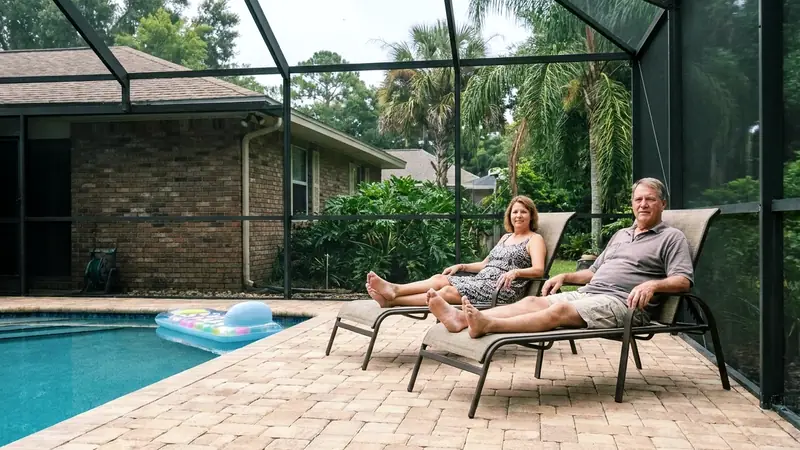
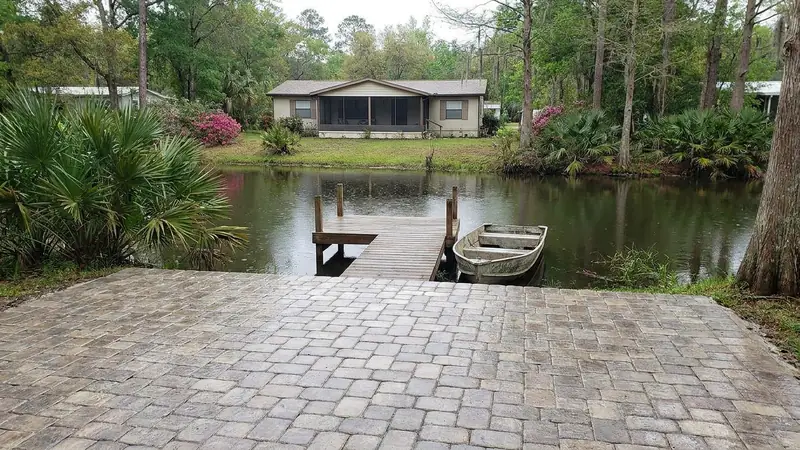
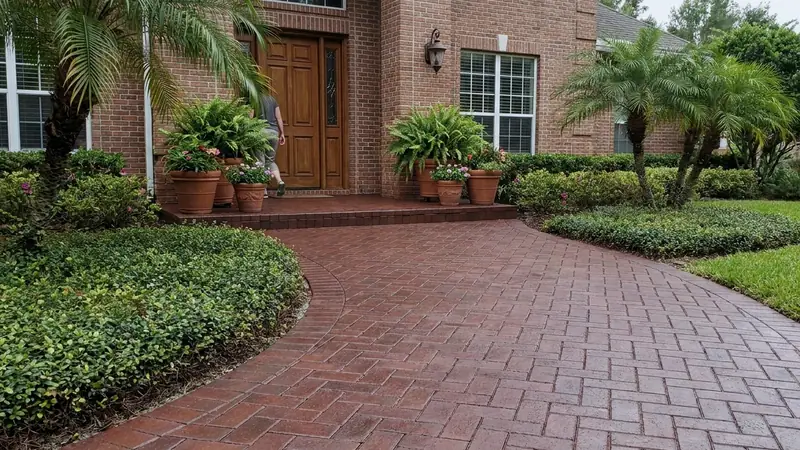
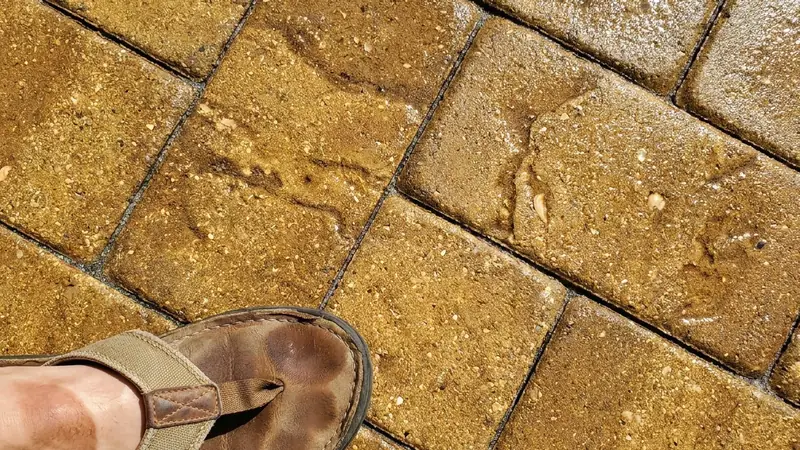
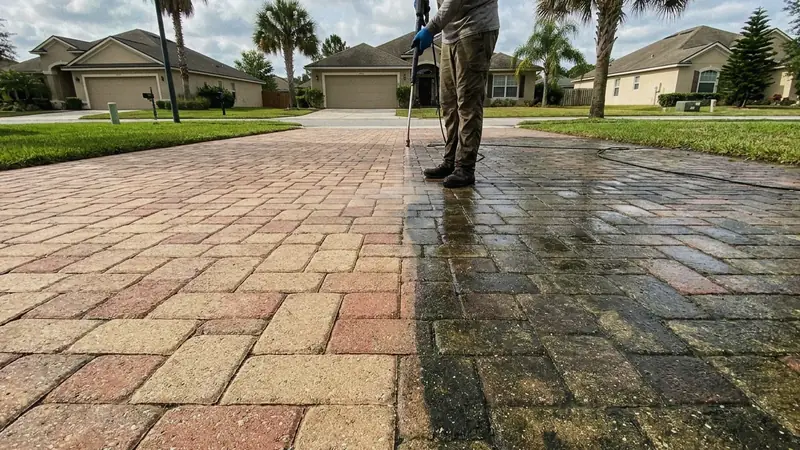
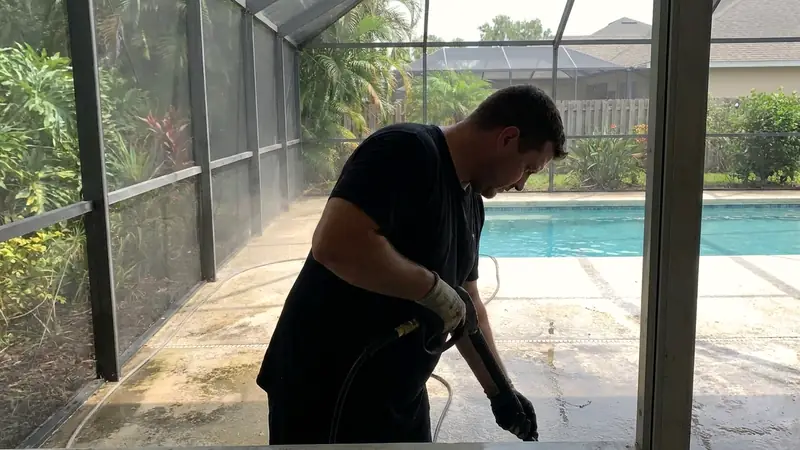
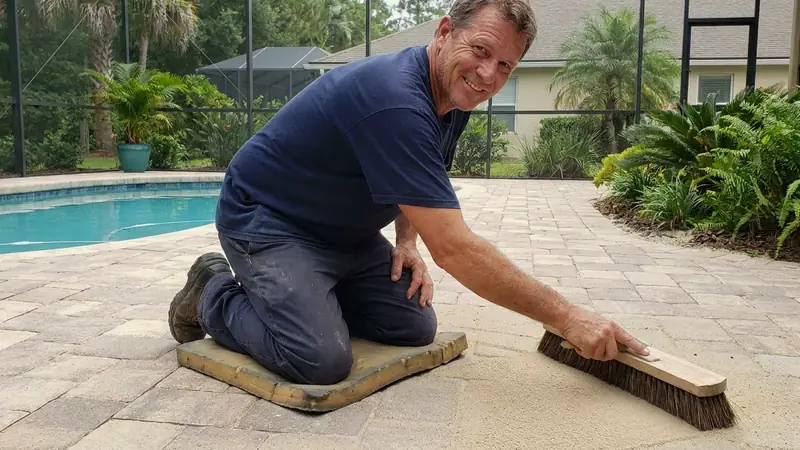
What do cleared paver stains look like around Interlachen?
Frequently Asked Questions
Can stains be removed from pavers without replacing them?
Many can. Cambridge Pavingstones, a paver maker, lists treatments for rust, oil, leaf tannin, efflorescence and paint. It also says its methods are not guaranteed and that a stain which will not come out can mean replacing the paver. A test on a hidden spot comes first.
Why is paver sealing so expensive?
Most of the cost is preparation, not the coat. Stallone's Pro Wash, a Northeast Florida company, says it removes the organic growth and staining that standard pressure washing misses. Stain treatment, joint sand and drying all happen before sealer goes on.
How much to clean and seal pavers?
Northeast Florida companies publish about $1.75 to $3.25 per square foot for clean, sand and seal. A 400 square foot patio lands near $700 to $1,300 at that range. Individual stain treatments have no published price, so ask for one on the quote.
Is it good to seal pavers in Florida?
Yes, once color has faded and joints have thinned. Unilock says a sealer protects against water, dirt, oil and stains. Safe Touch says sealing helps keep leaf stains from setting the following season. Sealing does not take out a stain that is already in.
What causes orange stains on pavers in Interlachen?
Usually iron. Safe Touch says iron in well water and reclaimed irrigation causes orange staining, and Cambridge Pavingstones says to find the source, such as sprinklers, patio furniture or fertilizer. Water that carries iron keeps staining until the source changes, so ask the contractor about it.
Will more pressure remove a rust stain?
No. Safe Touch says rust needs a rust treatment and then a rinse, and that more pressure makes it worse. Cambridge Pavingstones says rust remover can damage a sealer and may need more than one application, so the order of work matters.
Why do leaves leave brown marks on my pavers?
Leaves carry tannin. Cambridge Pavingstones says the stain comes back every leaf season. Safe Touch says oak tannin is evened out with a surface cleaner and sealing helps keep it from setting next year. Wherever trees overhang the pavers, the cycle repeats.
How long does it take to lift an oil stain from pavers?
Longer than a rinse. Cambridge Pavingstones describes soaking up the excess and leaving an oil treatment on for 6 to 8 hours until it dries to a powder, then sweeping it off. A stain that has soaked in for months may need repeat passes.
What are the white patches on my pavers?
Most likely efflorescence, a salt haze that rises from the concrete. Unilock says it usually fades in two to three months and can take a year. Cambridge Pavingstones lists a dedicated efflorescence remover, rinsed off and repeated if needed. Cloudy old sealer can look similar.
Does algae by an Interlachen lake count as a stain?
It looks like one, and it returns where the surface stays wet. The town has more than 28 lakes and a humid subtropical climate. Stallone's Pro Wash lists organic growth among what a proper cleaning removes. Shade and sprinklers decide how fast it comes back.
Ready to clear the stains from your Interlachen pavers?
Phone or fill in the short form, and a contractor answers within one business day, usually much sooner.
Free, no obligation